#West End Icons
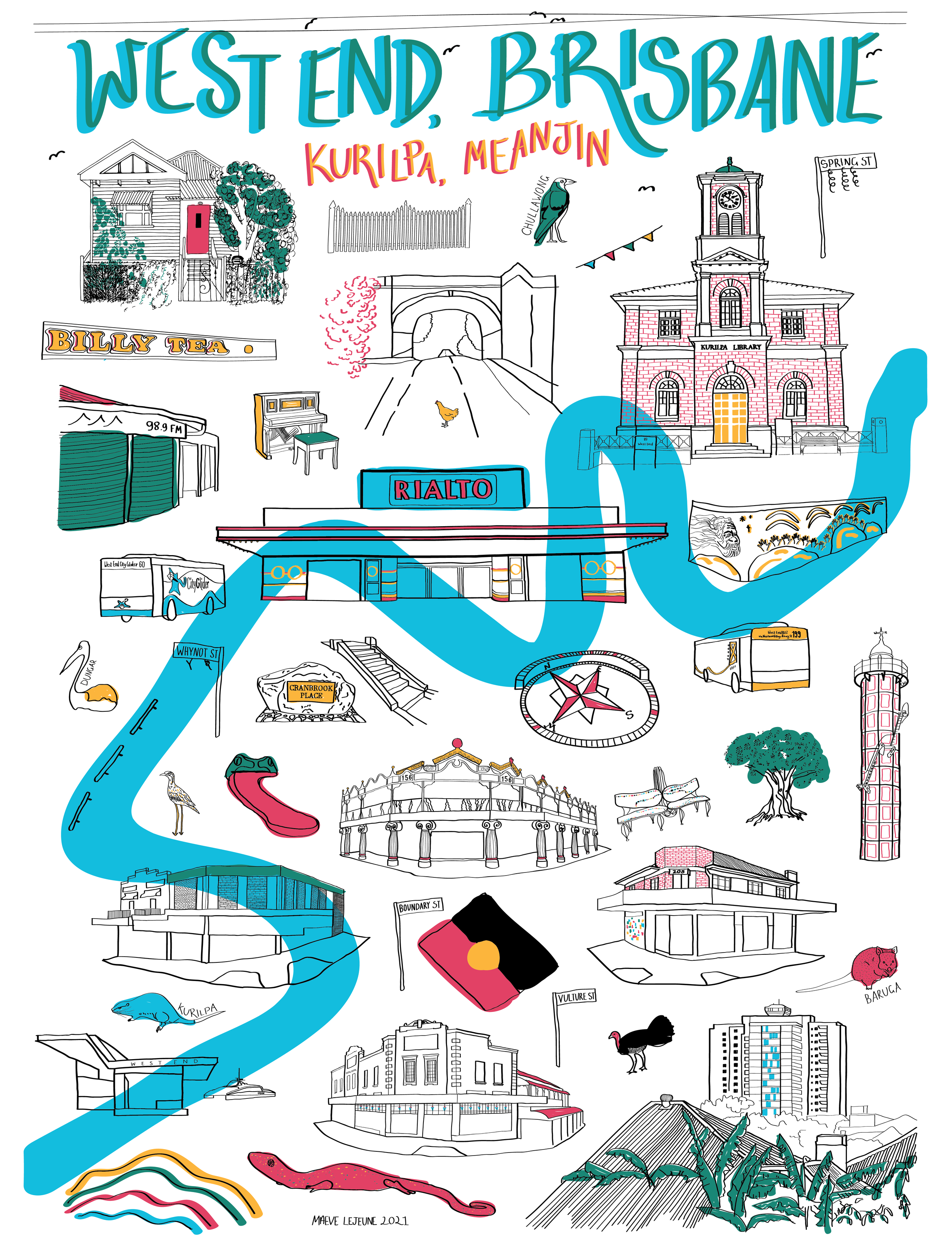
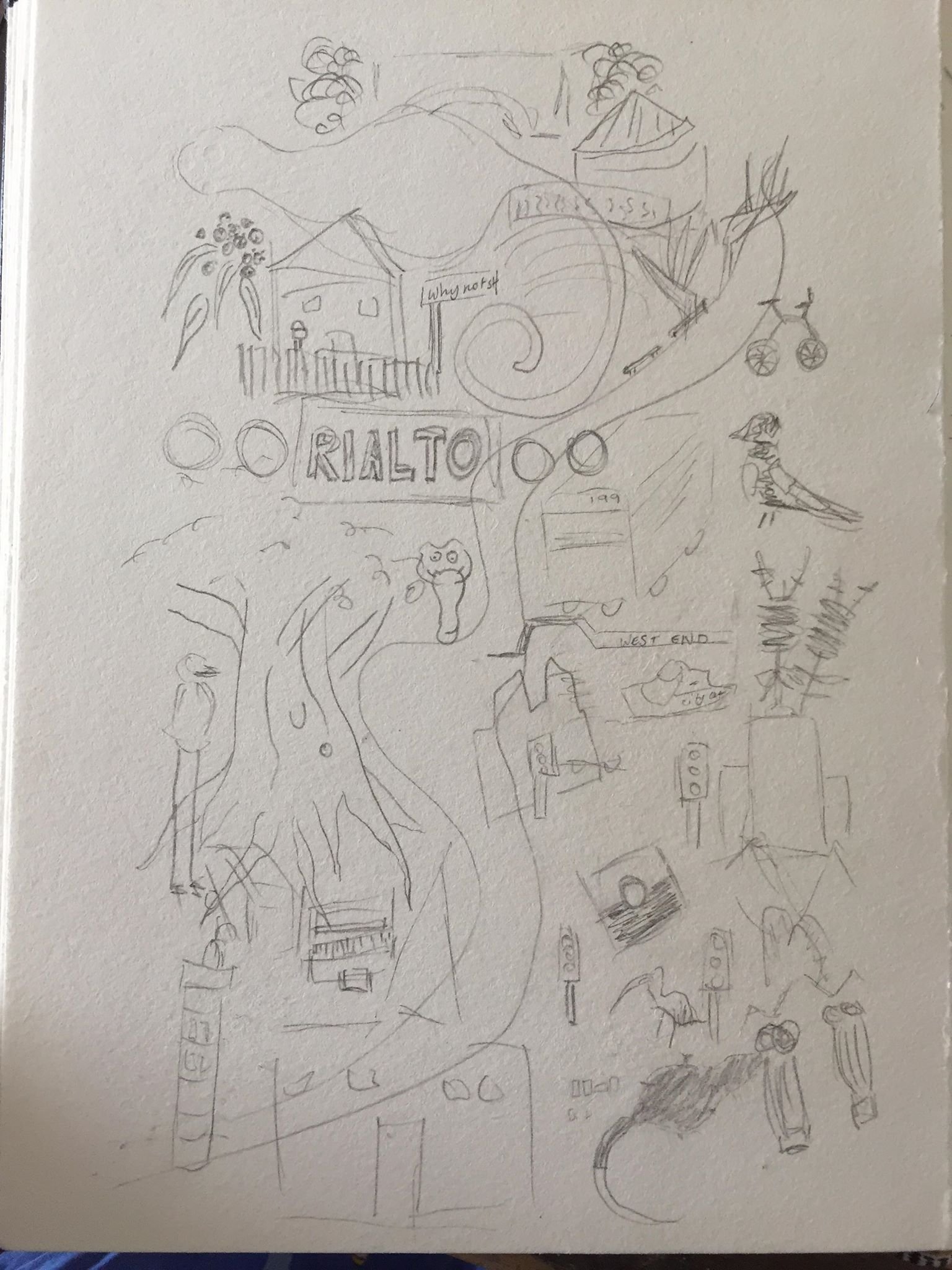
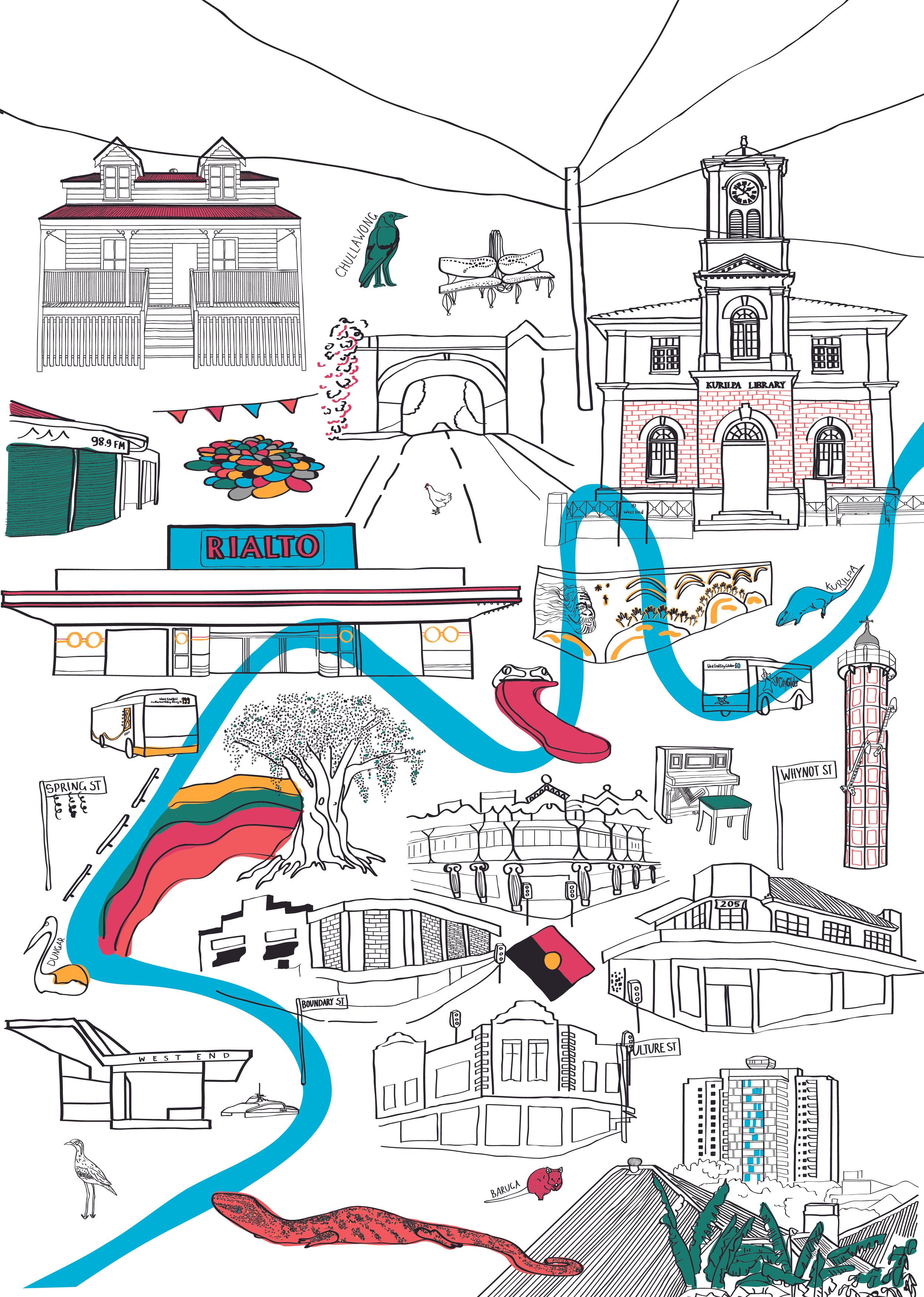
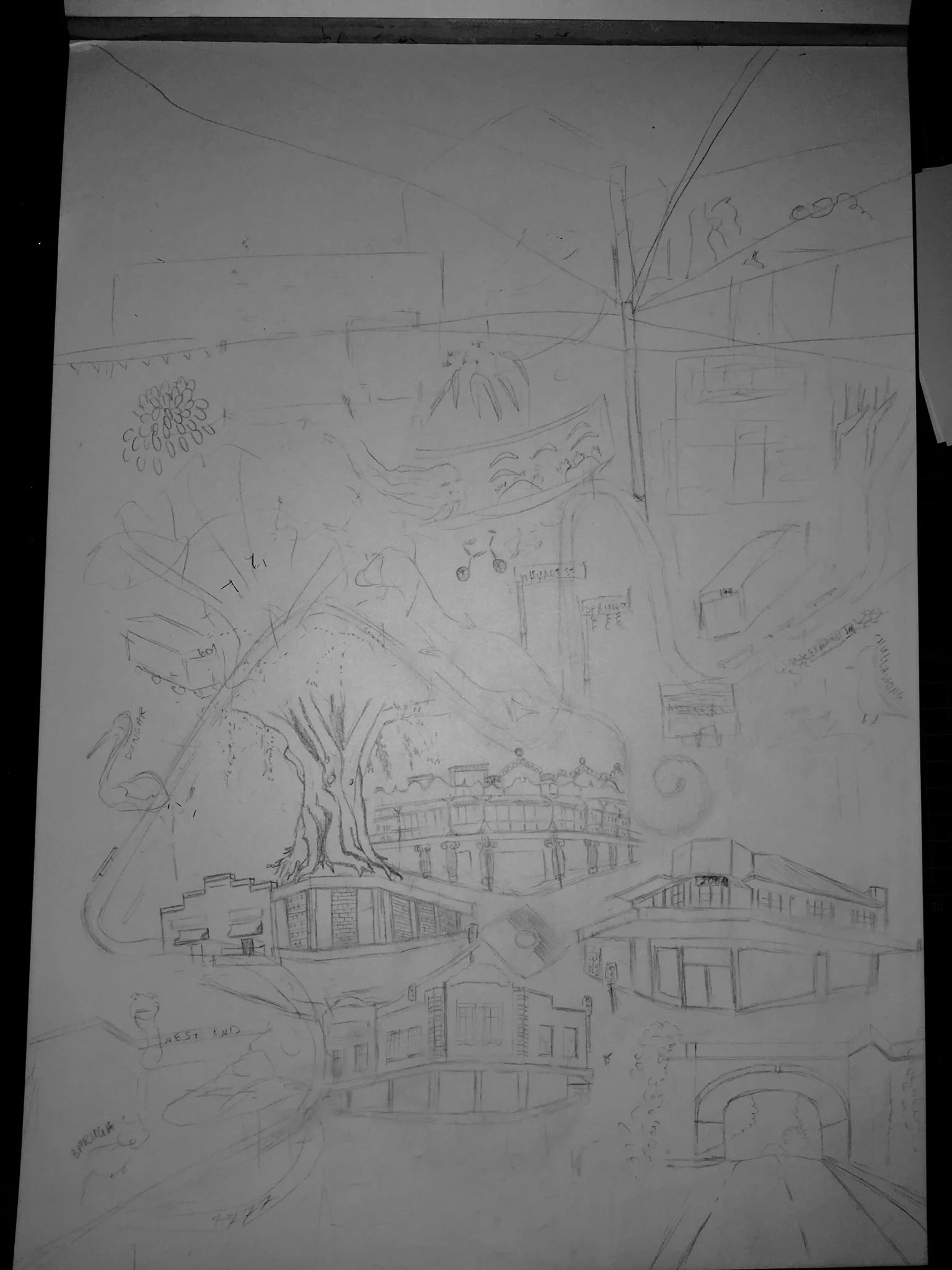
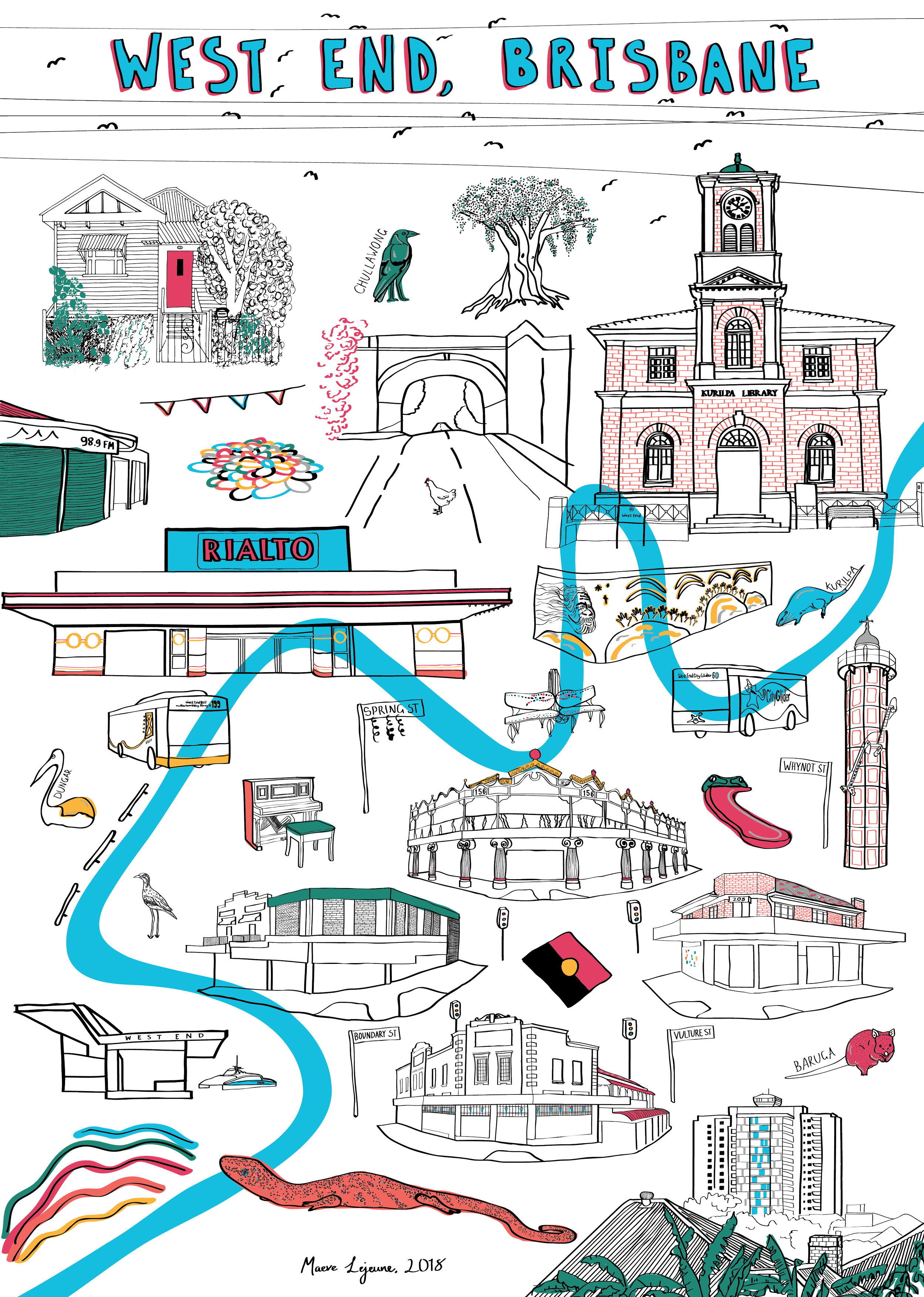
Who doesn’t love a nostalgic tea towel? I LOVE them. Especially the tourist ones that hark back to the ‘80s. I wanted to create something that would hopefully have the same nostalgia (for me at least) in 40 years time.
Enter: The Icons of West End tea towel
West End means a lot of different things to a lot of different people. There are probably icons I’ve missed, maybe purposefully, maybe unintentionally. None of these things will last forever. At least for now they’re immortalised in tea towel form and hopefully won’t change anytime soon.
Some of the icons on the West End tea towel include:
My childhood house.
Kurilpa Library: The first purpose built municipal library in Queensland (which is well overdue for an upgrade).
The piano (no longer) in Bunyapa Park.
The 98.9FM radio kiosk at Small Park.
The 199 & City Glider: The local buses
The Rialto: A former theatre and one of my favourite buildings ever.
Cranbrook Place: Thousands of people walking along the river every day pass this site and wouldn’t know what it’s commemorating (this used to be me).
Cranbrook Place is a ‘sorry site’. It recognises a house near Orleigh Park, where Aboriginal girls and young women were taken from their families and forced to work as servants for wealthy white families from 1900 to 1906.
In 1998 a plaque was installed recognising the land’s connection with the ‘Stolen Generation’. A plaque containing the Federal Government’s Apology was erected in the park in 2012.
The Gas Stripping Tower: Heritage listed, the tower is the only one of its kind left in Australia today. It’s a bonus that it’s still nice to look at (usually if you’re sitting on a rug at the markets and wondering what the heck it is and how the children climbing on it got up there!).
It is made of cast iron and was shipped out of England in sections in the 1880’s. Its role was to strip raw coal gas of its impurities - ammonia and coal tar - and, not to be wasted. These impurities were then drained and sold as ammonia liquor.
It’s hard to picture such an industrial operation happening in our backyard today. 4101 locals would not be standing for it lol, but it’s important to acknowledge the rich history of the suburb, and remember that West End was and still is, in some areas, an industrial space (until the government sells everything to their developer mates ha).
The four buildings on each corner of the intersection of Boundary Street: Thanks to Highgate Hill Historical Vignettes there’s a whole lot of history and wonderful pictures that tell the story of these still-standing buildings.
The Boundary Street Aboriginal flag: Boundary Street has a dark past. It takes its name from the colonial boundary that forcibly excluded Aboriginal people, primarily the Yuggera and Turrbal peoples, from Brisbane’s town area after 4pm.
The South Brisbane Sailing Club: The third oldest sailing club in Brisbane.
Torbreck: Brisbane’s first high-rise residential tower.